Frame one product question
Define the intended outcome, current scope, constraints, and explicit open questions before comparing solutions.
AI-native product development for physical-product teams
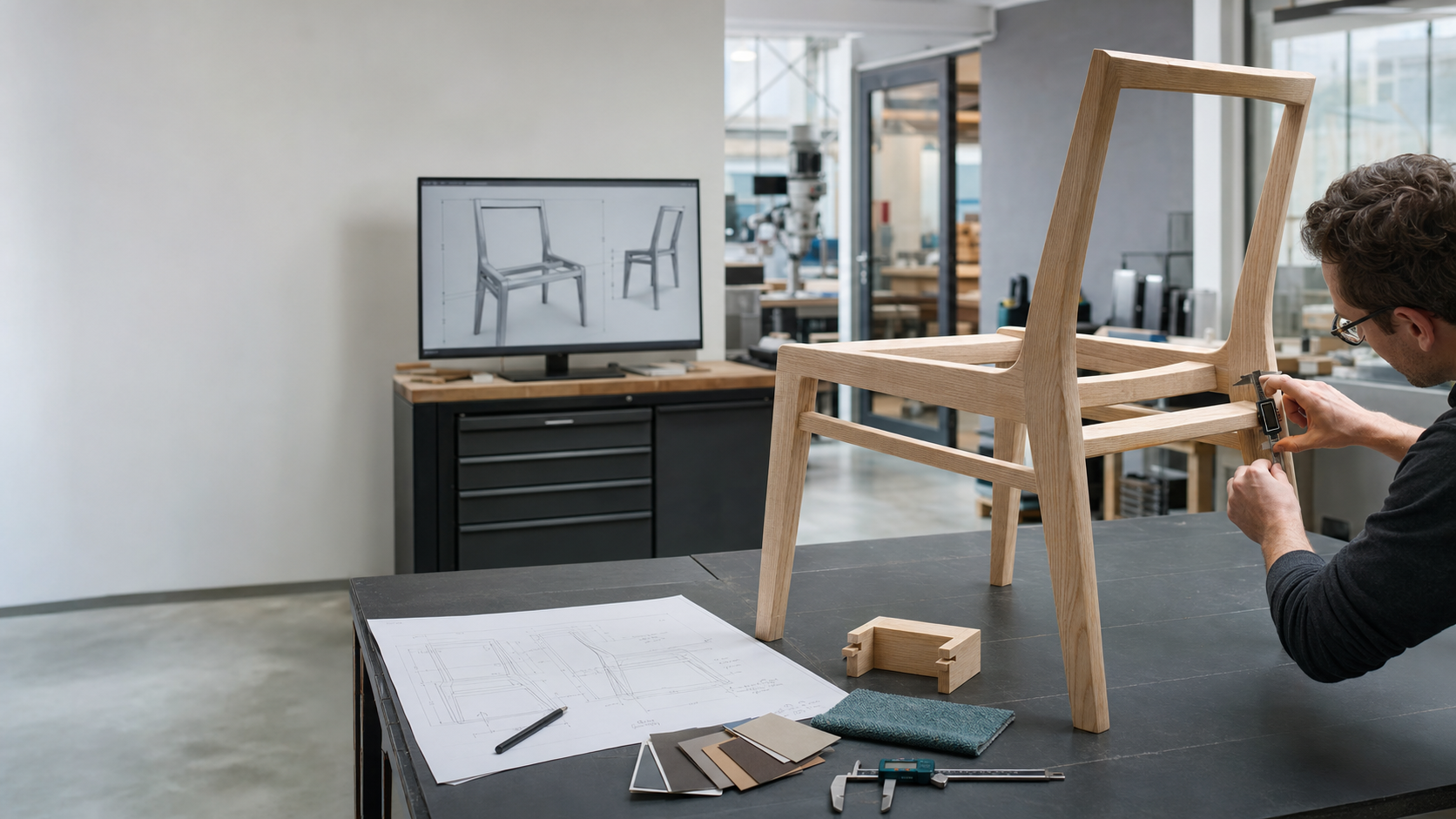
DesignBuilt turns parallel product inputs into human-confirmed decisions—then keeps those decisions connected across versions, design tools, prototypes, suppliers, variants, and production.
For small, design-led physical-product teams. Starting with furniture.
The decision and continuity problem
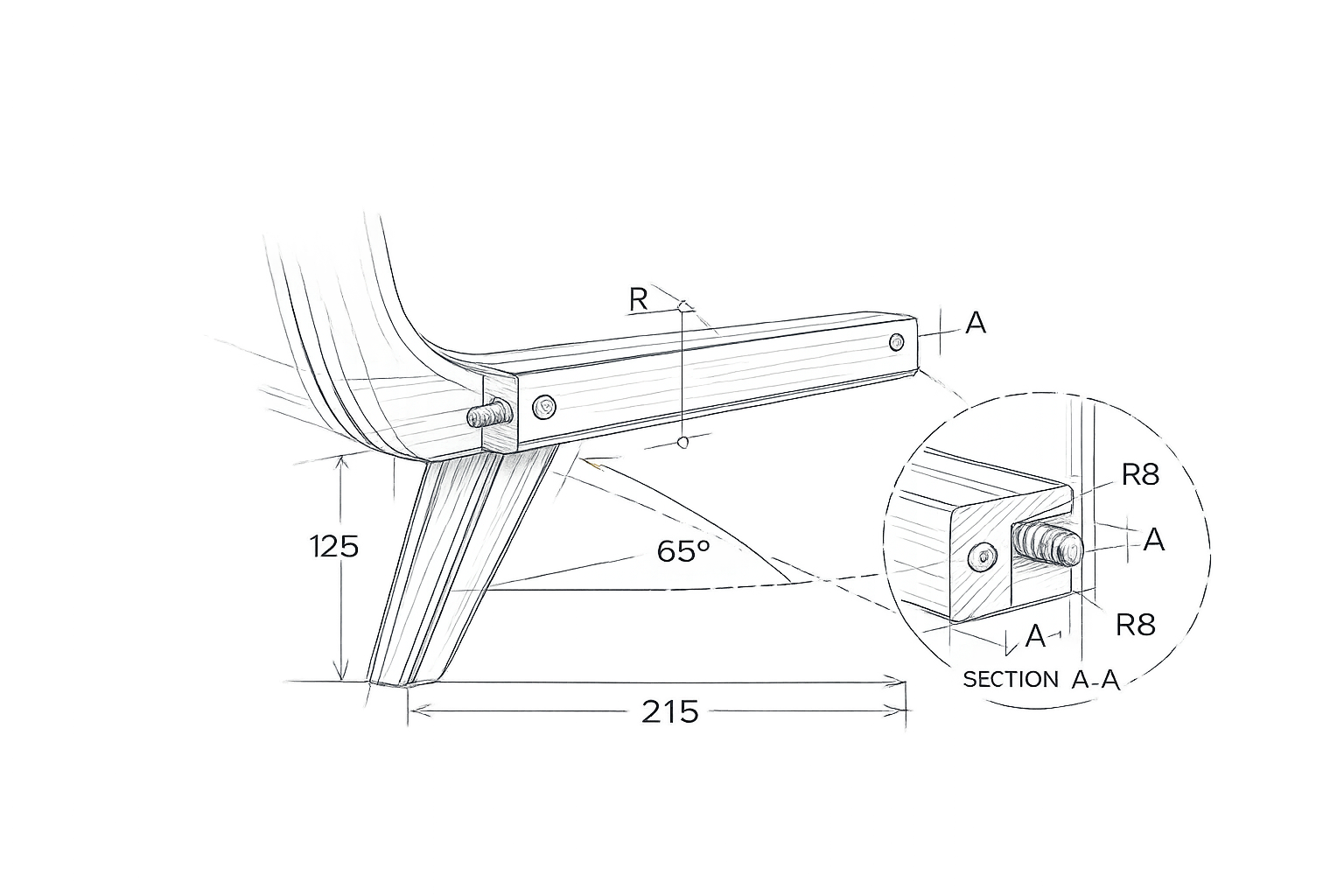
AI, references, CAD, prototypes, and suppliers all produce useful inputs. None of them knows which conclusion the team accepted, which version it applies to, or what a later change invalidates.
Define the intended outcome, current scope, constraints, and explicit open questions before comparing solutions.
Align model outputs, references, artifacts, and objections without flattening disagreement or uncertainty.
Only a confirmed Candidate becomes a versioned Product Basis that can govern the work that follows.
Embedded workflow demo
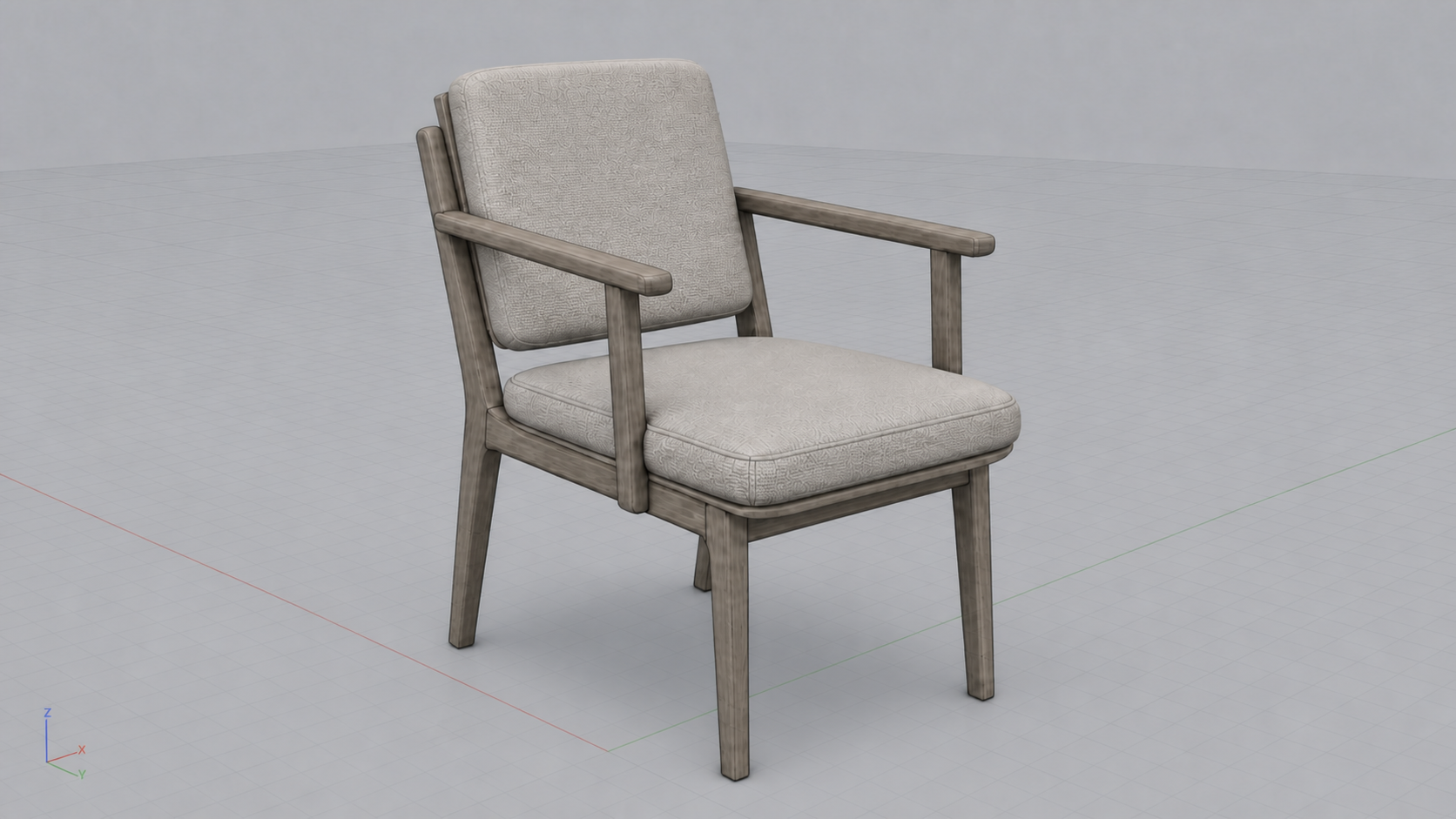
A furniture brand is preparing a chair for a 240-unit hotel order, with two finishes and a project-specific variant. A seat-depth question begins across Claude, ChatGPT, and Rhino, expands into a seat-and-back study, becomes Hotel Chair v6, and reaches the workshop without carrying the whole private project with it.
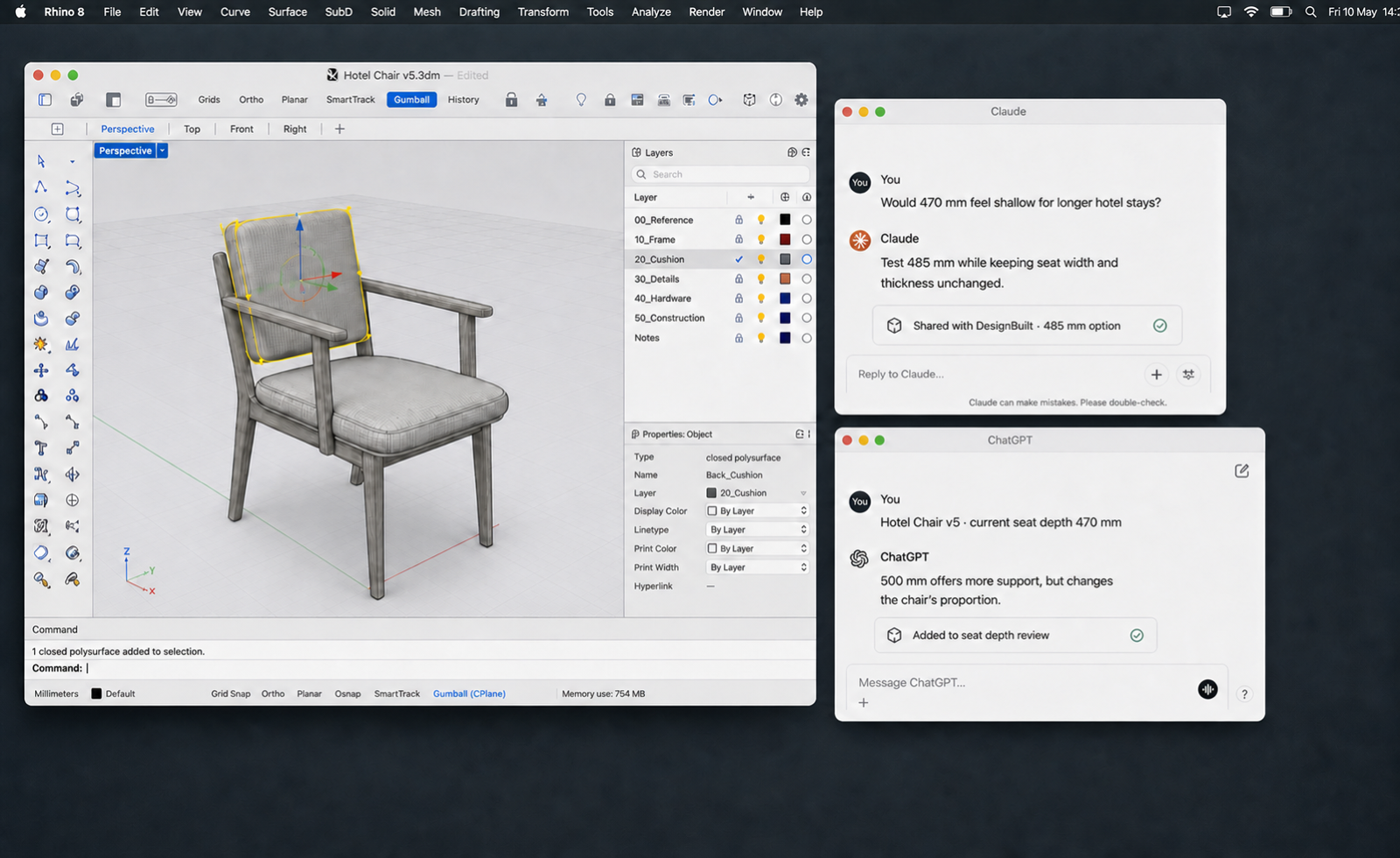 nowSeat depth needs review
Current vs. Claude vs. GPT
Please open DesignBuilt on a desktop or laptop to use the full guided prototype.
The guided prototype ends inside Northline Workshop: exact dimensions and prototype questions travel forward, while private discussions and unrelated studies stay with the designer.
The technical proof contracts
Frame one product question, compare parallel inputs horizontally, and keep disagreement and missing evidence visible.
A human-confirmed decision becomes an explicit basis that another model or collaborator can continue from.
The workshop receives controlled context and can return a fabrication proposal without rewriting the source product reality.
A change is complete only when a revised artifact, execution receipt, or explicit human verification comes back.
Workshop task and Working Slice
A workshop task states what to build and evaluate. A Working Slice carries the exact Product Basis, selected views, open questions, and evidence return path into a bounded recipient context—never into the designer's private discussions.
The next professional outcome
Decision target, intended outcome, scope, constraints, source set, and the questions still open.
Approved test basis, critical dimensions, fixed intent, allowed variation, and validation plan.
A proposed substitution framed with constraints, evidence, impact, ownership, and approval path.
Exact branch basis, current artifacts and BOM, locked requirements, open items, and recipient scope.
Technical boundary
Model-neutral. Host-native. Adapter-mediated.
DesignBuilt does not migrate native conversations or promise universal CAD writing. Supported hosts exchange selected Candidates and Product Basis requests; artifacts participate through the capabilities their adapters actually provide, with human execution and verification when needed.
Furniture first. Architecture-capable.
DesignBuilt begins where we can validate the workflow deeply: furniture products moving through design, prototypes, suppliers, variants, and production release. The same product-development structure extends naturally into manufactured interior systems and prefabricated building components.
Design intent, components, dimensions, materials, workshop proposals, prototype decisions, variants, and production packages. The contract chair is the enterprise scenario inside this vertical.
First verticalRepeated room packages, project-specific configurations, client approvals, site interfaces, finish systems, and batch manufacturing.
Expansion wedgeProduct families, formal release gates, code constraints, installation interfaces, factory feedback, and configuration control.
Broader categoryDesignBuilt
DesignBuilt helps small physical-product teams make the next consequential decision and prepare the next piece of work without losing the Product Basis that makes either one trustworthy. We are looking for professional furniture workflows that can challenge the working prototype.